Back Rowing Front
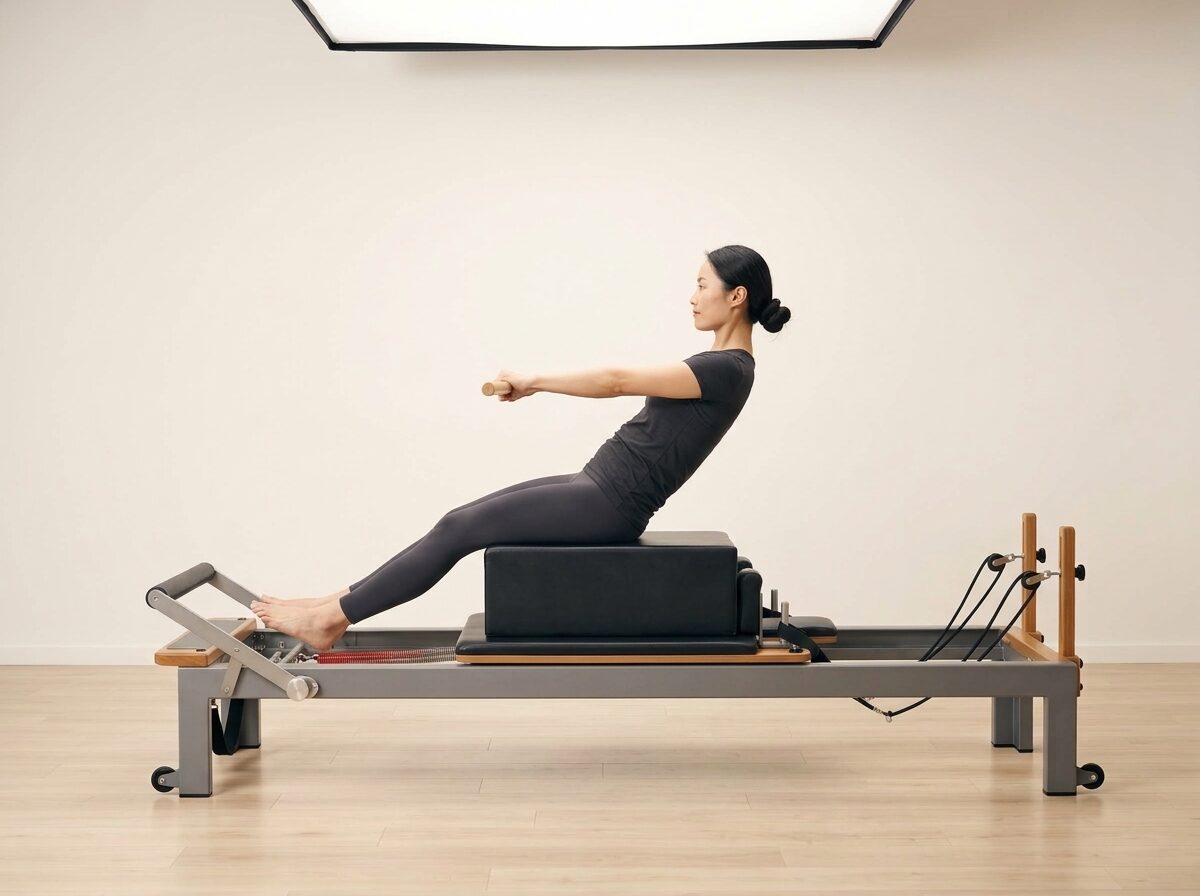
Classical seated rowing on the long box: the pole pulls to the chest as the spine curls back and articulates up, blending arm work with deep core control.
- Body
- Reformer
- Equipment
- Movement
Teaching Precautions
Common precautions, not exhaustive. Screen every client and refer when in doubt.
- Osteoporosis / Osteopenia: The curl loads the spine in flexion; substitute neutral or extension-based pulling work.
- Acute Lumbar Disc Herniation: These seated pulls load the spine in flexion. Keep the spine long and the pelvis still, reduce the range, or substitute neutral extension-based pulling work.
Apparatus Setup
Reformer
Target Muscles
Setup Instructions
Sit on the long box facing the footbar with the legs extended long and the feet on the carriage. Hold the pole overhead with both hands, arms straight and shoulders down.
Execution Instructions
Exhale to pull the pole down toward the chest as the spine curls back into a C-curve, then articulate up over the pelvis and press the pole forward to return.
Teaching Cues
"Curl the spine one vertebra at a time — the pole travels with the ribs, never ahead of them."
"Reach the pole up through the crown of the head before the pull begins — the arms stay long until the curl."
"Exhale to pull and curl, inhale to press the pole forward and roll up."
Modifications & Progressions
Shorter Curl (Regression)
Curl back only halfway and use a lighter spring while the articulation is established.
Held Curl (Progression)
Hold the curled position for two full breaths before pressing the pole forward.
Tall Spine Pull (Injury Modification)
With low bone density, keep the spine long and upright rather than curling back, pull the pole only to the chest and shorten the range.
Similar Exercises
Same category, or body position when the category is unique.