Knee Stretches: Round Back
Dynamic kneeling core and stability exercise focusing on spinal articulation and lower body control.
- Body
- Reformer
- Movement
Teaching Precautions
Common precautions, not exhaustive. Screen every client and refer when in doubt.
- Osteoporosis / Osteopenia: Avoid loaded spinal flexion. Substitute with neutral spine variations.
- Knee Issues: Kneeling under load can irritate the knees; pad under the knees, keep the toes tucked, and shorten the press-out range.
Apparatus Setup
Reformer
Target Muscles
Setup Instructions
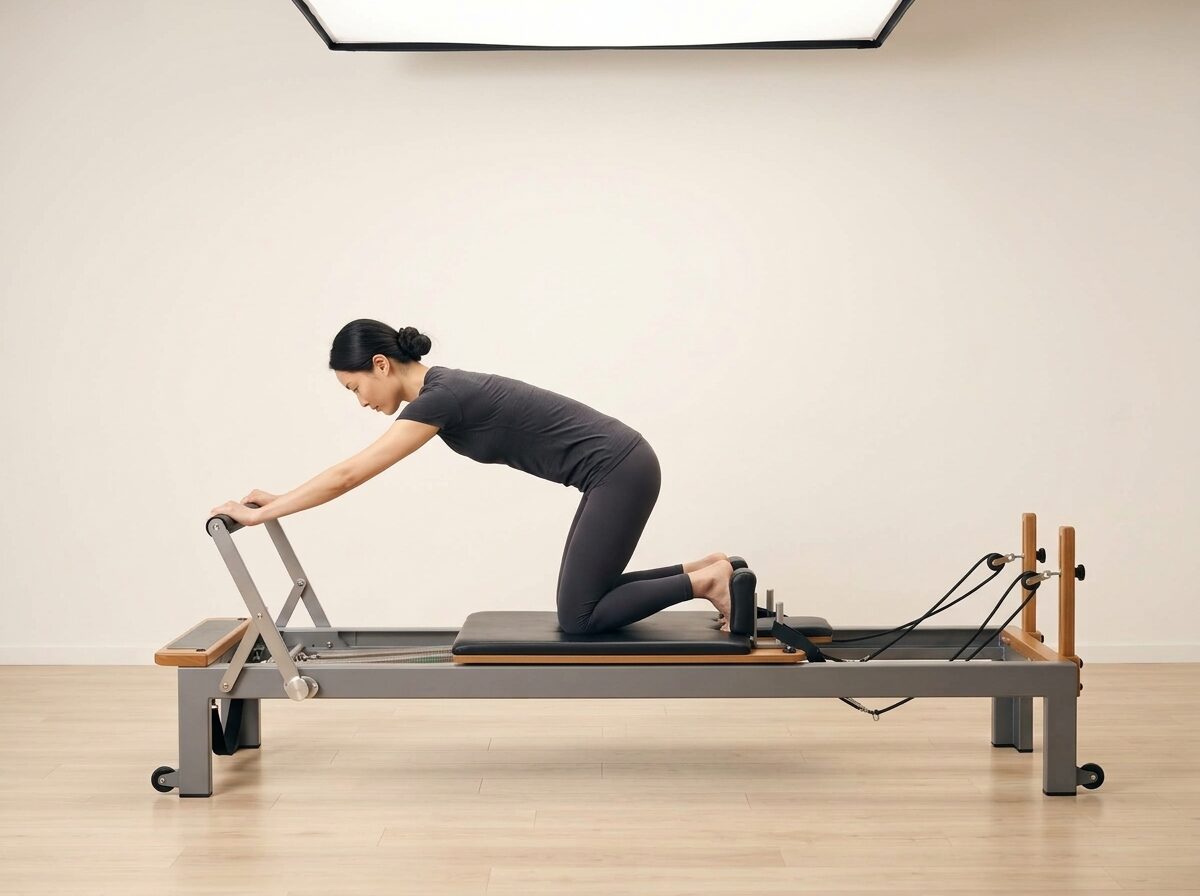
Kneel on carriage facing the footbar with balls of feet against shoulder rests, hands on footbar, spine in flexion.
Execution Instructions
- Exhale to press the carriage out by scooping the abdominals and letting the knees drive back, keeping the spine rounded and the pelvis stable without lifting the hips.
- Inhale to draw the carriage home into the stoppers.
Teaching Cues
"Keep your shoulders stable over your wrists as your knees glide in and out."
"Keep the knees hip-width apart and the toes tucked under."
"Inhale to draw the carriage home using the centre, not the feet."
Modifications & Progressions
Neutral Spine Knee Stretches (Regression)
Use a neutral spine variation instead of round back for clients with specific lower back restrictions or acute lumbar sensitivity.
Floating Hands (Progression)
Lift the hands off the footbar and hold the rounded spine at the end of the press to increase core demand.
Neutral Spine Press (Injury Modification)
With low bone density, keep the spine long and neutral instead of rounding, press the carriage only a short distance and take no loaded spinal flexion.
Related Exercises
The rest of the Knee Stretches family.