Classical RepertoireIntermediateProneUpper Body & ArmsSpinal Extension📦 Long Box
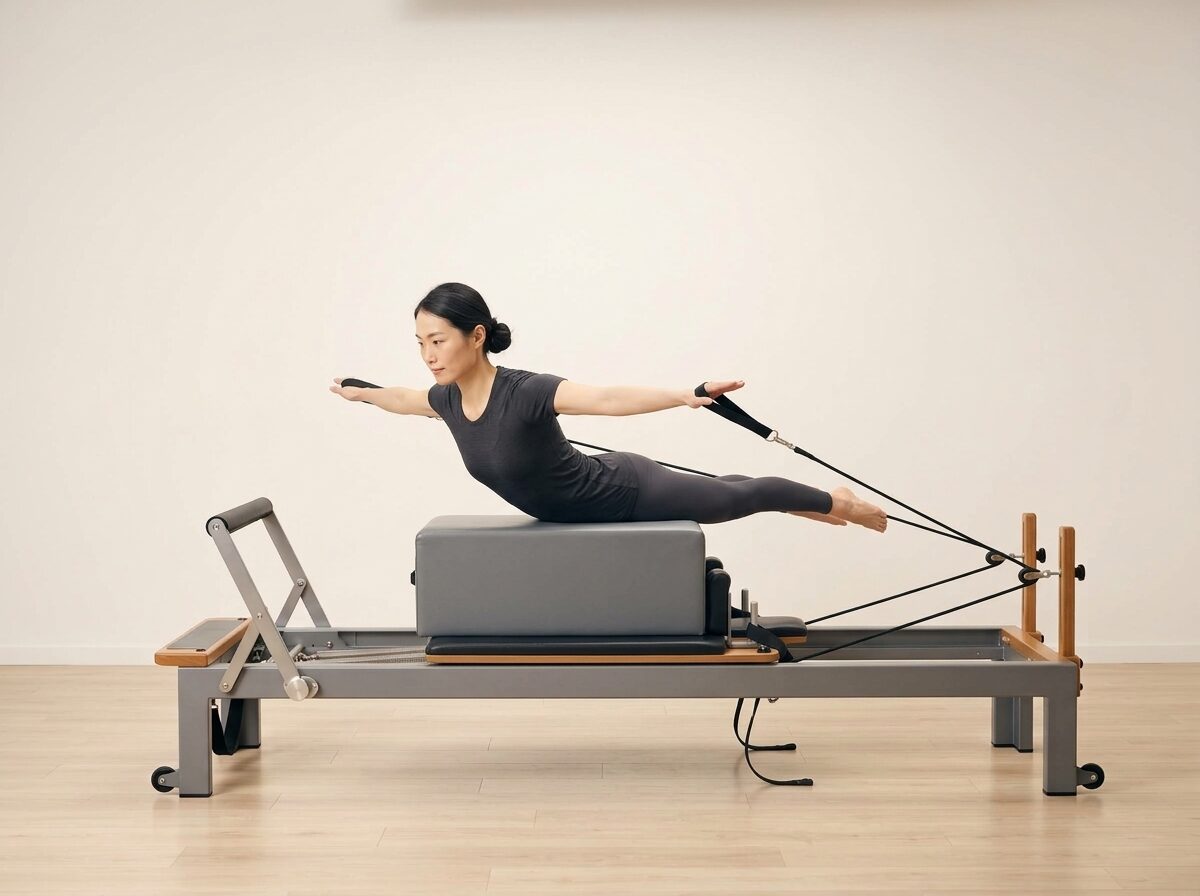
Prone T-shape pull on the long box: from the same chest-off position the arms open wide and back into a T, so the work moves to the posterior deltoids and rhomboids. The wider arm path makes it the easier of the two to keep the shoulder blades down.
AI-generated illustrationThe schematic below is the authoritative instruction — follow it, not this photo.
Body
Reformer
Strap
Equipment
Movement
Schematic — Pulling Straps: T PullReformer · 1 medium or 1 light spring · Footbar Down · Headrest Down
⚠️ Clinical Contraindications
Shoulder Impingement: Keep the pull in a pain-free range; do not force the arms high.
Spinal Stenosis / Spondylolisthesis: Keep the lift small and the pelvis anchored on the box.
Pregnancy: Prone positioning is not suitable after the first trimester; use a wedge, or a side-lying or standing alternative.
Lie prone on the long box holding the straps with the arms extended forward.
Execution Instructions
Pull the straps out and back in a T-shape, squeezing the shoulder blades, then return with control.
Exhale as the arms open and the shoulder blades draw together; inhale to release forward, keeping the ribs down and the neck long rather than shrugging into the ears.
Teaching Cues
Alignment
"Keep the neck long and the gaze down."
Control
"Squeeze the shoulder blades together at the end of the pull."
Breath
"Exhale as the arms pull back, inhale as they return."
Modifications & Progressions
Lighter Blade-Down Pull (Regression)
Reduce the spring and the pull range to keep the shoulder blades down.
Two-Breath T Squeeze (Progression)
Slow the pull and hold the squeeze for two breaths.
Low Wide Pull (Injury Modification)
For shoulder impingement, keep the arms at or below shoulder height, widen the pull and stop before the shoulders lift.