Squat
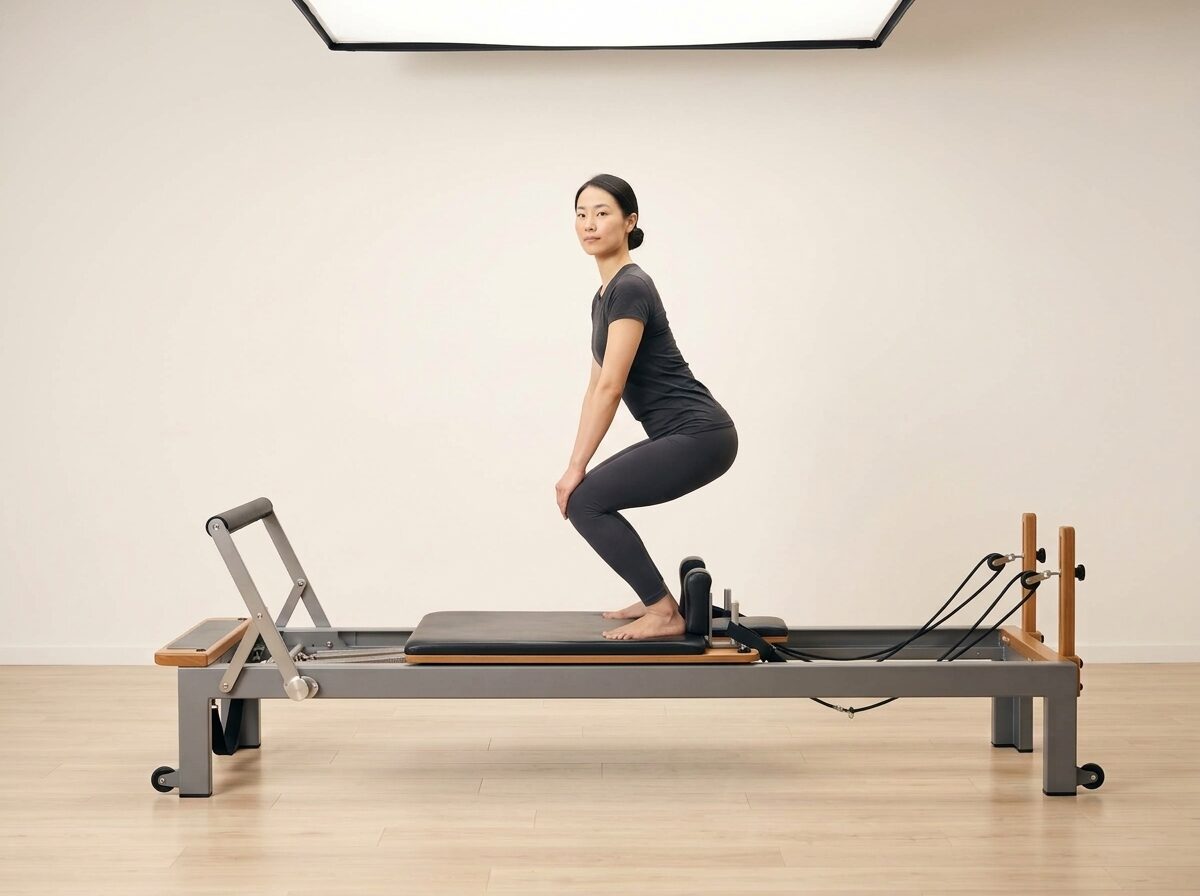
Classical squat on the carriage: heels on the low footbar, the knees bend into a squat as the carriage presses out, building leg strength and lower-body control.
- Body
- Reformer
- Movement
Teaching Precautions
Common precautions, not exhaustive. Screen every client and refer when in doubt.
- Knee Issues: Keep the knees tracking over the second toe and limit the depth; stop if the knee complains.
Apparatus Setup
Reformer
Target Muscles
Setup Instructions
Stand on the carriage facing the footbar with the heels on the low footbar, feet hip-width apart and hands on the footbar for balance.
Execution Instructions
Exhale to bend the knees into a squat as the carriage presses out, keeping the chest tall and the knees tracking over the toes; inhale to press back up as the carriage returns.
Teaching Cues
"Track the knees over the second toes and keep the chest tall."
"Lower only as far as the heels stay down and the spine stays long."
"Exhale to squat, inhale to press back up."
Modifications & Progressions
Shallower Squat (Regression)
Limit the depth of the squat and keep the heels down throughout.
Three-Count Descent (Progression)
Slow the descent to a three-count to increase time under tension.
Lower Footbar (Injury Modification)
For knee issues, set the footbar lower so the heels stay down, squat only to a quarter depth and keep the knees tracking over the second toes.
Similar Exercises
Same category, or body position when the category is unique.