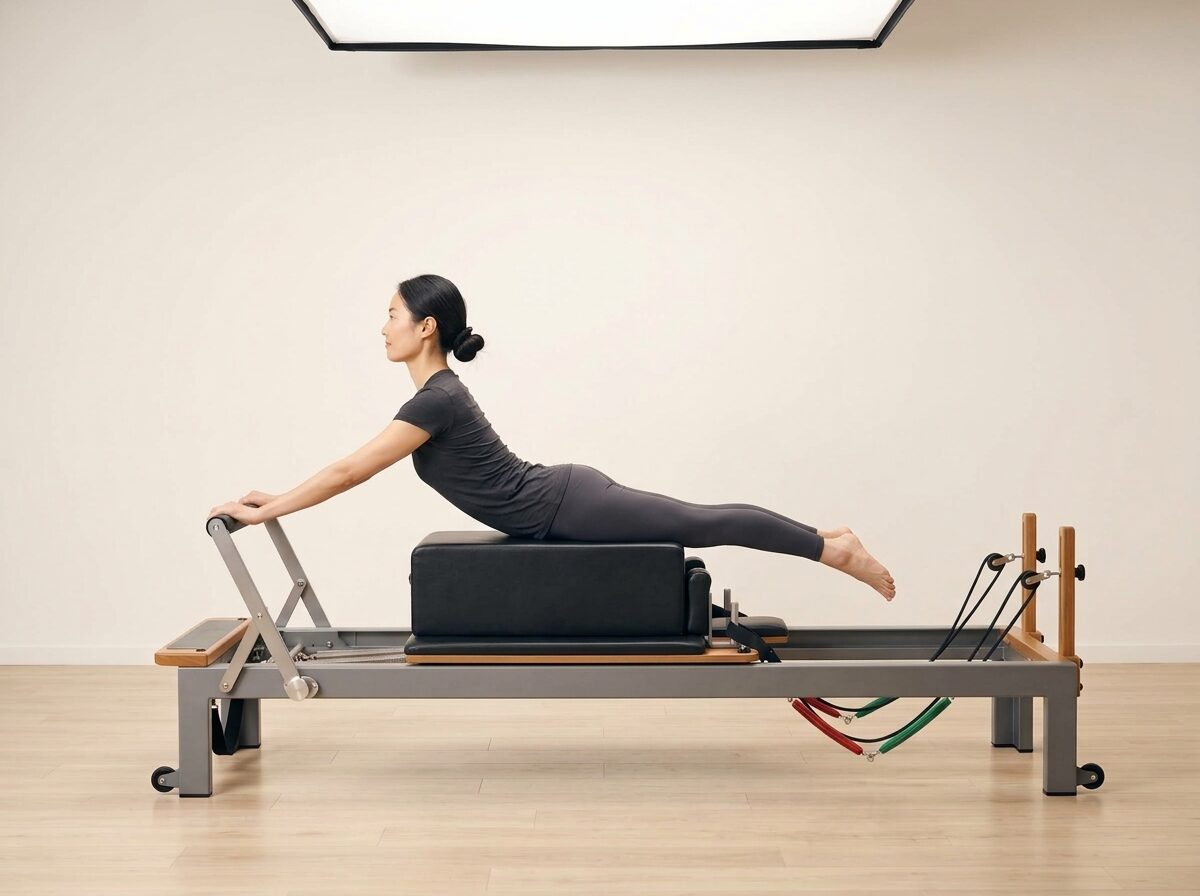
Swan on the Reformer
Advanced spinal extension and pelvic stability exercise.
- Body
- Reformer
- Equipment
- Movement
Teaching Precautions
Common precautions, not exhaustive. Screen every client and refer when in doubt.
- Spinal Stenosis / Spondylolisthesis: Sustained lumbar extension can aggravate stenosis and pars stress; keep the lift small and the ribs connected.
- Low Back Pain: Extension-intolerant clients may ache; substitute supported thoracic extension.
- Pregnancy: Prone positioning is not suitable after the first trimester; use a wedge or side-lying variation.
Apparatus Setup
Reformer
Target Muscles
Setup Instructions
Lie prone on the long box with hands on the footbar, shoulder-width apart. Legs extended and slightly externally rotated.
Execution Instructions
- Press the carriage out to a long line.
- As the carriage returns, extend the spine, lifting the chest into a controlled arch while maintaining abdominal engagement.
Teaching Cues
"Maintain shoulder-over-wrist alignment as carriage comes home."
"Inhale as you lift through the sternum, exhale to lower with control."
"Brace the abdominals before the sternum lifts — the extension comes from the upper back, not the low back."
Modifications & Progressions
Reduced Lift (Regression)
Lift the chest to a smaller height and keep the gaze down to protect the neck.
Extended Reach (Progression)
Reach the arms forward and lengthen the spine fully at the top of the lift.
Small Thoracic Lift (Injury Modification)
For extension-sensitive low backs, keep the chest lift small with the ribs connected, press the carriage only part way and stop at the first sign of pinching in the low back.
Similar Exercises
Same category, or body position when the category is unique.