Feet in Straps: Lift & Lower
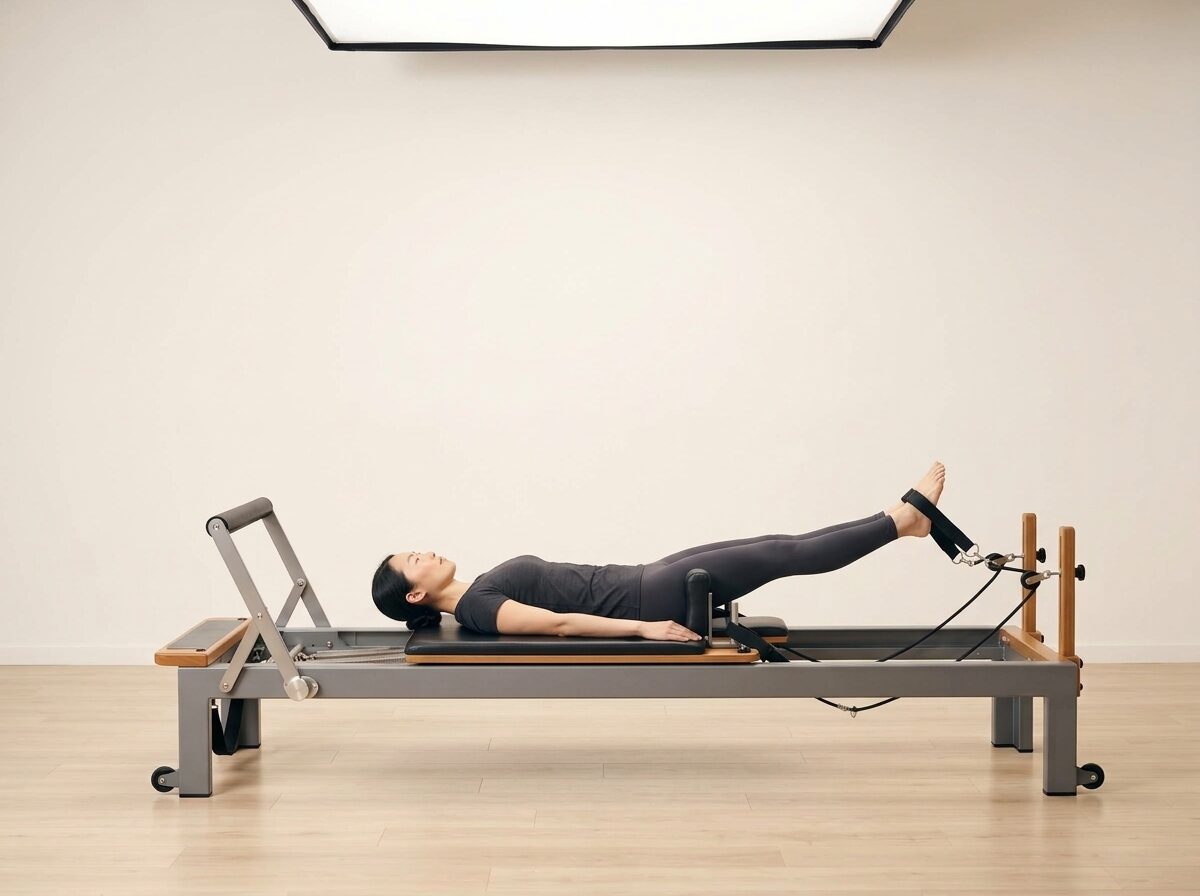
Controlled lowering and lifting of both legs with straps for hamstring control and lumbopelvic stability.
- Body
- Reformer
- Strap
- Movement
Teaching Precautions
Common precautions, not exhaustive. Screen every client and refer when in doubt.
- Low Back Pain: This one demands strong pelvic anchoring; reduce the spring and stop if the low back aches.
- Pregnancy: Supine strap work can compress the vena cava after the first trimester; elevate the head or use side-lying alternatives.
Apparatus Setup
Reformer
Target Muscles
Setup Instructions
Lie supine on the carriage with feet in the long straps, legs extended toward the ceiling.
Execution Instructions
Lower the legs toward the footbar with control, then lift them back, keeping the ribs down and the pelvis anchored.
Teaching Cues
"Lower slowly — do not let the straps win."
"Exhale as the legs lower, inhale as they lift."
"Pull the ribs down, keep the tailbone heavy on the carriage and the pelvis level as the legs lower — stop before the lower back lifts."
Modifications & Progressions
Single Leg (Regression)
Lower and lift one leg at a time to halve the load.
Lower Range (Progression)
Lower the legs closer to the carriage before lifting back.
Short Lowering Arc (Injury Modification)
For low back pain, lower the legs only to the point where the pelvis starts to tip, keep the ribs down and use a lighter spring.
Related Exercises
The rest of the Feet in Straps family.