Feet in Straps: Scissors
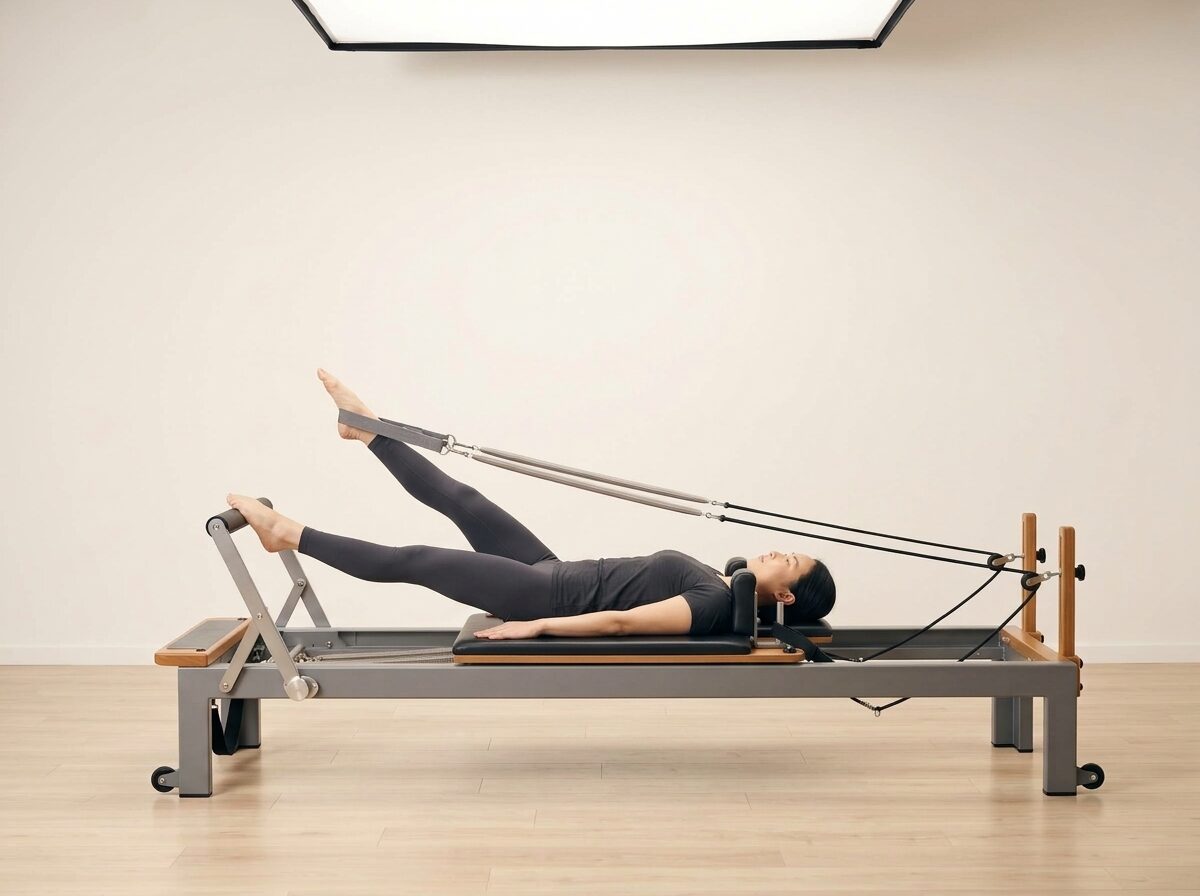
Rhythmic feet-in-straps scissor challenging abdominal endurance, hip flexor control, and lower body coordination.
- Body
- Reformer
- Strap
- Movement
Teaching Precautions
Common precautions, not exhaustive. Screen every client and refer when in doubt.
- Low Back Pain: Alternating leg drive can rock the pelvis; brace the abdominals, reduce the spring, and stop if the back aches.
- Hip Impingement: Deep hip flexion in the scissor can pinch; shorten the range.
- Pregnancy: Supine strap work can compress the vena cava after the first trimester; elevate the head or use side-lying alternatives.
Apparatus Setup
Reformer
Target Muscles
Setup Instructions
Lie supine on the carriage with feet in the long straps, legs extended toward the ceiling at 90 degrees, pelvis neutral and arms by your sides.
Execution Instructions
- Exhale to scissor the legs — one toward the head, one away — and inhale to switch with a small, precise range.
- Keep the lower back anchored and the torso still.
Teaching Cues
"Scissor from the hip sockets with a small, precise range."
"Keep the lower back anchored; the legs do all the work."
"Alternate the scissor with the breath — exhale to switch."
Modifications & Progressions
Smaller Arc (Regression)
Scissor in a small range with the legs closer to vertical to reduce load on the lower back.
Lower Scissors (Progression)
Lower the legs toward the carriage as you scissor to increase abdominal and hip flexor demand.
Shallow High Scissor (Injury Modification)
For hip impingement, keep the legs high and the scissor shallow so neither thigh travels close to the chest, and stop at the first pinch at the front of the hip.
Related Exercises
The rest of the Feet in Straps family.