Roll Over
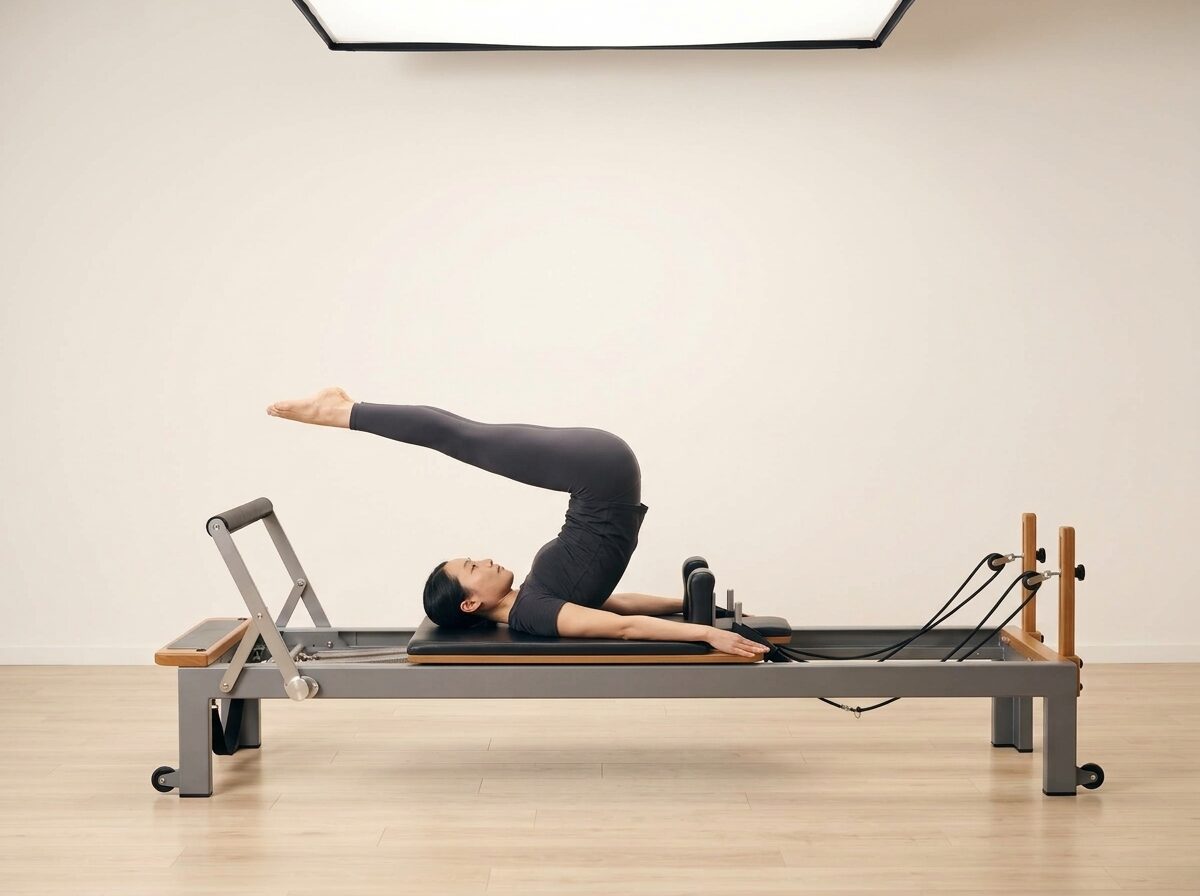
Overhead articulation with controlled roll-down, requiring strong core control and safe neck positioning.
- Body
- Reformer
- Movement
Teaching Precautions
Common precautions, not exhaustive. Screen every client and refer when in doubt.
- Neck & Cervical Strain: The roll-over loads the cervical spine; keep the head supported and skip with any neck compromise.
- Osteoporosis / Osteopenia: Loaded flexion and inversion; substitute neutral or extension-based work.
- Acute Lumbar Disc Herniation: Avoid end-range flexion under load; substitute a supported neutral roll-back.
- Pregnancy: Supine work after the first trimester can compress the vena cava; elevate the head and shoulders or use a side-lying alternative.
Apparatus Setup
Reformer
Target Muscles
Setup Instructions
Lie supine on the carriage with the legs extended toward the ceiling and the arms pressing into the carriage by the sides.
Execution Instructions
- Lift the hips and roll the legs overhead, then peel the spine back down with control.
- Exhale to roll up and over onto the shoulder blades, keeping the legs active and reaching; inhale to articulate back down one vertebra at a time, scooping the abdominals and pressing evenly through both arms — never fling the legs overhead or let the neck take the load.
Teaching Cues
"Roll through the spine — do not hinge at the hips."
"Keep the legs over the hips and use the abs to lift."
"Exhale as the legs roll over, inhale as the spine peels down."
Modifications & Progressions
Slow Peel (Progression)
Slow the roll-down and hold each vertebra position.
Half Roll-Over (Injury Modification)
Lower the legs only to a 45-degree angle and keep the neck long and supported for cervical strain.
Bent-Knee Overhead Roll (Regression)
Bend the knees overhead to shorten the lever and reduce the demand.
Similar Exercises
Same category, or body position when the category is unique.