Side Kicks
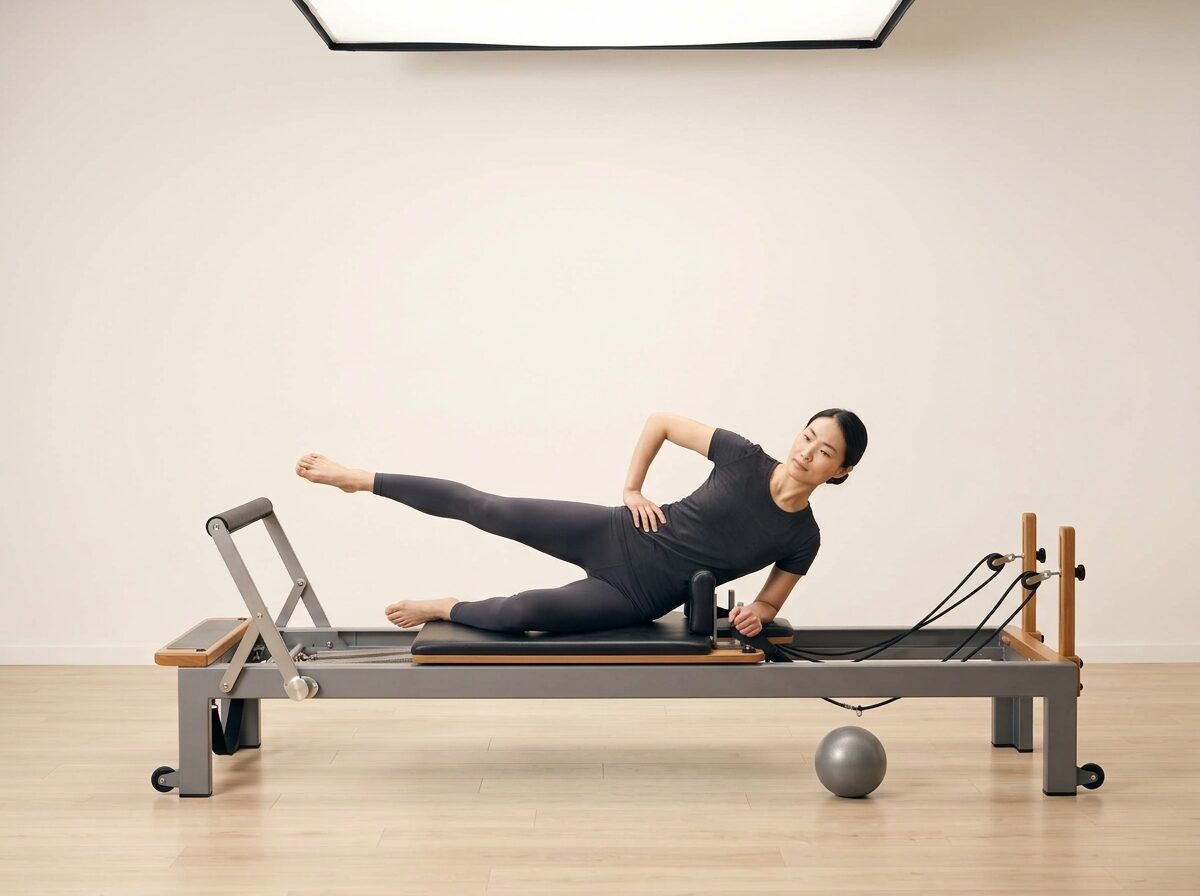
Side-lying front and back kicks developing hip mobility, gluteal control, and stable lateral posture.
- Body
- Reformer
- Equipment
- Movement
Teaching Precautions
Common precautions, not exhaustive. Screen every client and refer when in doubt.
- Low Back Pain: Keep the top hip stacked and the waist lifted; stop if the back aches.
- Neck & Cervical Strain: Rest the head on a ball or the bottom arm and keep the neck long.
- Hip Impingement: Kicking forward into deep hip flexion can pinch; shorten the range.
Apparatus Setup
Reformer
Target Muscles
Setup Instructions
Lie on one side on the carriage with the head resting on the small ball, legs extended long and stacked, the bottom arm long on the carriage and the top hand on the hip.
Execution Instructions
- Exhale to kick the top leg forward to hip height, inhale to sweep it back in a controlled arc.
- Keep the torso still and the pelvis stacked throughout.
Teaching Cues
"Exhale to kick the leg forward, inhale as it sweeps back."
"Keep the torso still and the pelvis stacked as the leg travels."
"Reach the leg long from the hip — no shortening of the waist."
Modifications & Progressions
Strap Resistance (Progression)
Loop the top foot in a strap anchored toward the footbar to add spring resistance to the kicks.
Lower Side Kick Height (Regression)
Kick the leg to a smaller height front and back, keeping the torso still.
Shallow Front Kick (Injury Modification)
For hip impingement, soften the knee and kick forward only to a shallow angle, stopping the front swing at the first pinch.
Similar Exercises
Same category, or body position when the category is unique.