Side-Lying Leg Lift
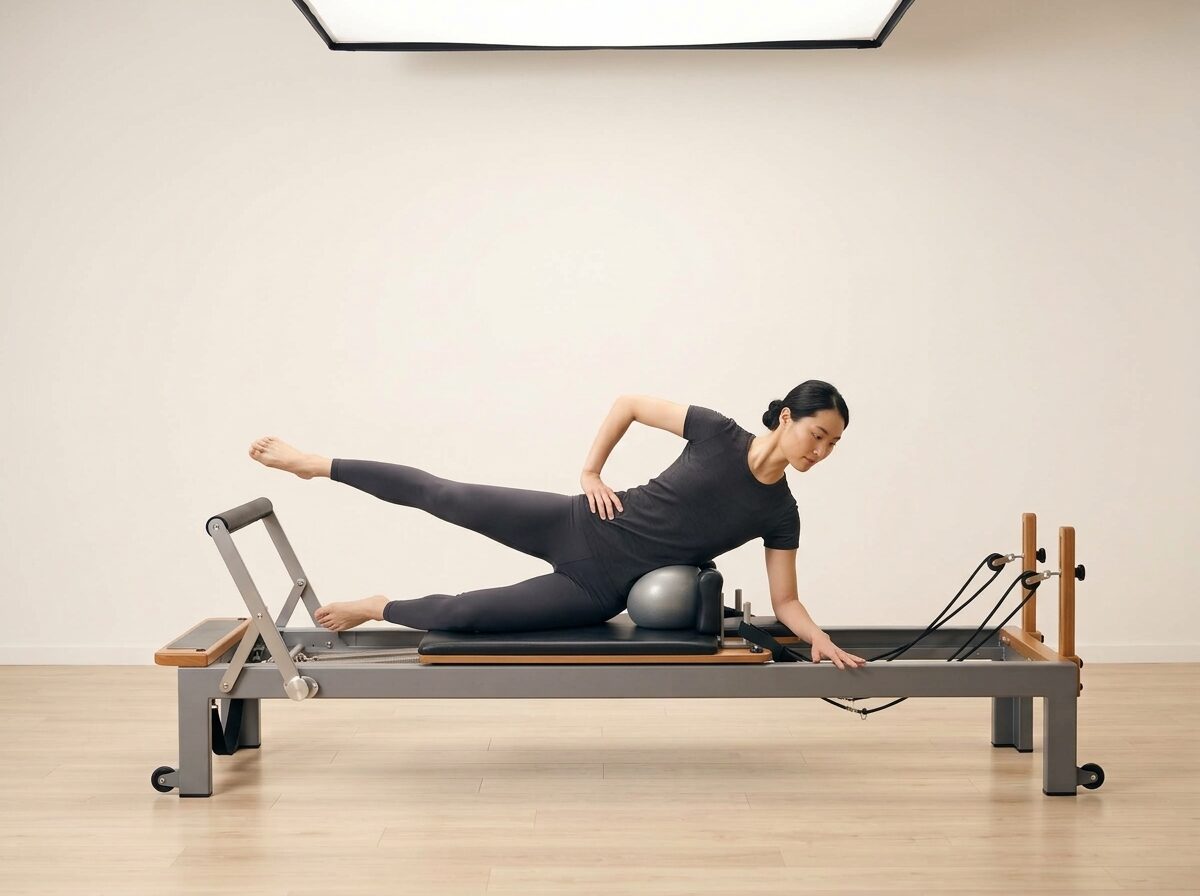
Side-lying hip abduction strengthening the gluteus medius and lateral core stability with a controlled, small range. The unstrapped, unloaded version of Reformer Star.
- Body
- Reformer
- Strap
- Equipment
- Movement
Teaching Precautions
Common precautions, not exhaustive. Screen every client and refer when in doubt.
- Neck & Cervical Strain: Use a ball or the bottom arm to support the head — the neck often gets shoved into the shoulder rest.
- Hip Impingement: Lifting the leg wide can catch the hip; keep the lift in a pain-free arc.
Apparatus Setup
Reformer
Target Muscles
Setup Instructions
Lie on one side on the carriage with the head resting on the small ball, legs stacked long, the bottom arm reaching toward the footbar for support and the top hand on the hip or carriage.
Execution Instructions
- Exhale to lift the top leg to hip height, inhale to lower with control.
- Keep the torso still and the pelvis stacked; switch sides.
Teaching Cues
"Stack the shoulders and hips — no rolling forward or back."
"Lift from the hip socket with the leg long, not from the lower back."
"Lower the leg with the same control you used to lift it."
Modifications & Progressions
Bent Bottom Leg (Regression)
Bend the bottom knee for a wider base of support and lift the top leg to a smaller height.
Strap Resistance (Progression)
Loop the top foot in a strap or add light resistance to strengthen the lift on the return.
Low Pain-Free Lift (Injury Modification)
For hip impingement, lift the top leg only to hip height with a softly bent knee and keep the arc below the point of the pinch.
Similar Exercises
Same category, or body position when the category is unique.