Single Leg Bridge
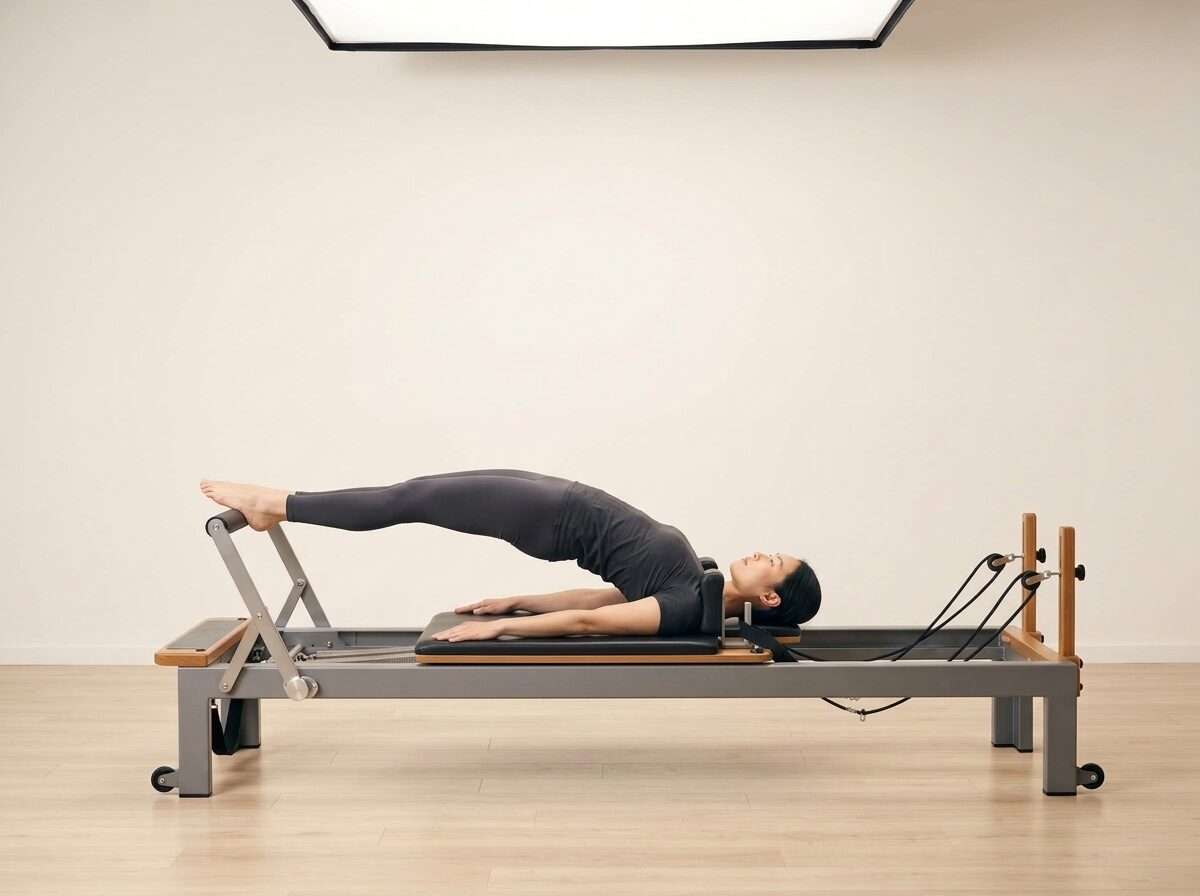
Spinal articulation and unilateral posterior chain work bridging the hips up with one leg extended long.
- Body
- Reformer
- Movement
Teaching Precautions
Common precautions, not exhaustive. Screen every client and refer when in doubt.
- Low Back Pain: Keep the pelvis level as the working leg extends; stop if the back aches.
- Hip Impingement: Driving the hip into extension under load can pinch; keep the bridge low, keep the extended leg in line with the trunk, and stop if the front of the hip catches.
- Pregnancy: Supine work after the first trimester can compress the vena cava; elevate the head and shoulders or use a side-lying alternative.
Apparatus Setup
Reformer
Target Muscles
Setup Instructions
Lie supine on the carriage with both feet flat on the footbar, hip-width apart, knees bent, arms long by your sides.
Execution Instructions
- Exhale to articulate the spine up into a bridge, extend one leg long, then inhale to lower it and roll down one vertebra at a time.
- Keep the hips level.
Teaching Cues
"Roll the spine up one vertebra at a time and roll down the same way."
"Keep the lifted leg long and the hips level at the top of the bridge."
"Hug the glutes at the top without overarching the low back."
Modifications & Progressions
Both Feet Down (Regression)
Perform a pelvic curl with both feet on the footbar to simplify the pattern before adding the extended leg.
Extended Leg Pulse (Progression)
At the top of the bridge, pulse the lifted leg a few inches for added glute and hamstring work.
Half Bridge (Injury Modification)
For low back pain, lift only to the base of the shoulder blades with the ribs connected, and return to a two-foot bridge whenever the back complains.
Similar Exercises
Same category, or body position when the category is unique.