Standing Lunge
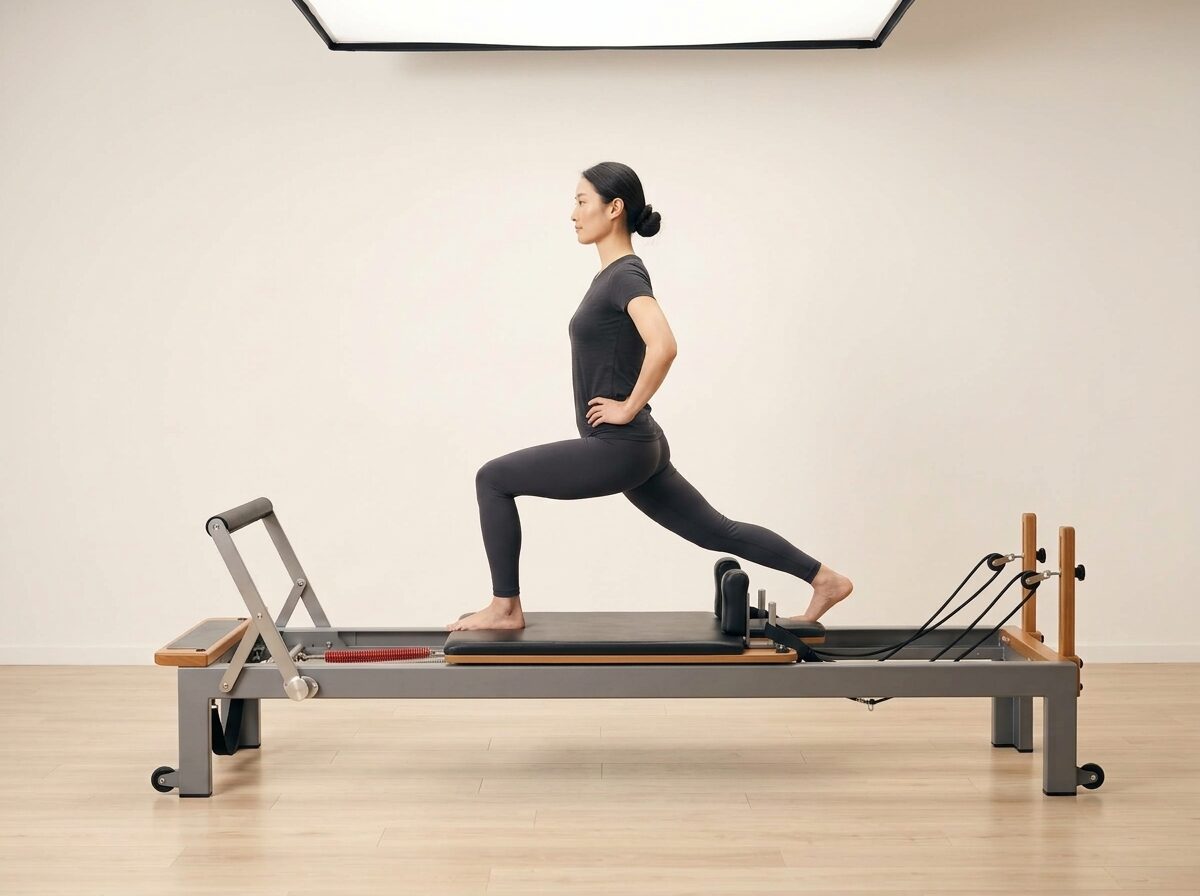
Standing lowering lunge on the carriage: the front foot stays on the footbar while the carriage glides back and the front knee bends, then the front heel drives you home. The descending counterpart to Tree, which presses out as the standing leg straightens.
- Body
- Reformer
- Movement
Teaching Precautions
Common precautions, not exhaustive. Screen every client and refer when in doubt.
- Knee Issues: Deep lunges load the front knee. Shorten the stride, keep the knee tracking over the second toe, and limit depth; stop if pain occurs.
Apparatus Setup
Reformer
Target Muscles
Setup Instructions
Stand on the carriage facing the footbar with the front foot centred on the footbar, the back foot on the carriage behind you, hands on the hips and the torso tall.
Execution Instructions
- Exhale to bend the front knee into a lunge as the carriage glides back, inhale to press through the front heel and return.
- Keep the torso tall and the pelvis square.
Teaching Cues
"Stack the front knee over the ankle and keep it tracking over the second toe."
"Keep the torso tall and the pelvis square as the carriage glides back."
"Press through the front heel to return — no pushing the carriage with momentum."
Modifications & Progressions
Shortened Stride (Regression)
Take a shorter stride and reduce the depth of the lunge, keeping the front heel down.
Shorter Stride, Less Depth (Injury Modification)
Keep the front knee tracking over the second toe, shorten the stride, and avoid deep flexion; stop if the knee complains.
Hands Free (Progression)
Take the hands off the hips and reach them forward as the carriage glides back, so the balance is held by the trunk rather than the arms.
Similar Exercises
Same category, or body position when the category is unique.