Footwork: Single Leg
Unilateral footwork building leg strength, hip stability, and core control as each leg works independently against spring resistance.
- Body
- Reformer
- Movement
Teaching Precautions
Common precautions, not exhaustive. Screen every client and refer when in doubt.
- Knee Issues: Unilateral pressing loads one knee; keep the foot flat, the knee tracking over the second toe, and the range small.
- Low Back Pain: Unilateral work can shift the pelvis; keep the hips level and stop if the back aches.
- Pregnancy: Supine work after the first trimester can compress the vena cava; elevate the head and shoulders or use a side-lying alternative.
Apparatus Setup
Reformer
Target Muscles
Setup Instructions
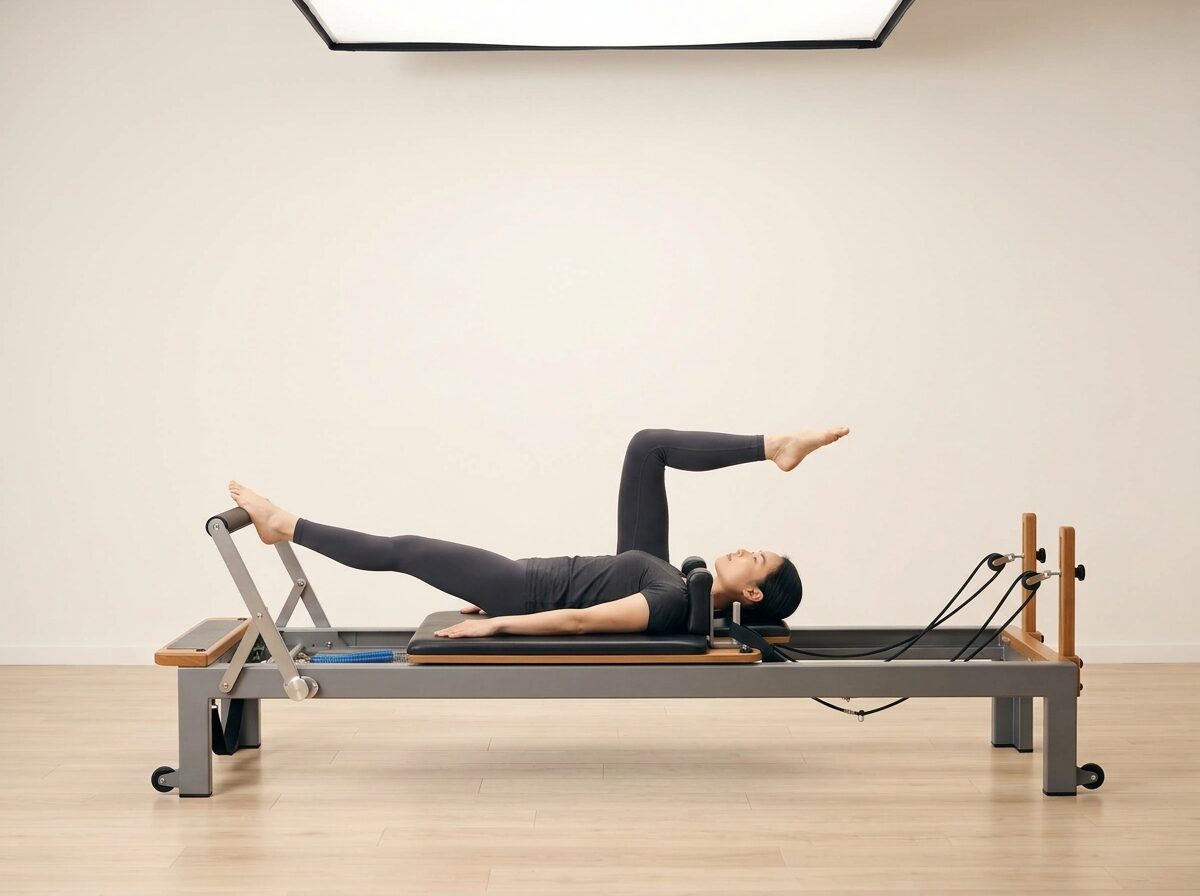
Lie supine on the carriage with one foot on the footbar and the other leg extended toward the ceiling or held in tabletop. Spine neutral, arms by your sides.
Execution Instructions
- Exhale to press the carriage out to full knee extension without locking, inhale to control the return.
- Keep the pelvis level and the working leg tracking over the second toe.
Teaching Cues
"Track the working heel and toe over the second toe the whole way out and back."
"Keep the pelvis level — no hip hike or tilt as the carriage travels."
"Match the press and return tempo; avoid kicking or bouncing the carriage."
Modifications & Progressions
Both Feet Footwork (Regression)
Press with both feet on the footbar to reduce the unilateral demand on the pelvis and legs before returning to single leg.
Extended Leg (Progression)
Hold the non-working leg extended long toward the ceiling to increase the core and stability challenge.
Partial Single Press (Injury Modification)
For knee issues, keep the foot flat and press only partway to extension with the knee tracking over the second toe, returning to both feet if the knee aches.
Related Exercises
The rest of the Footwork family.