Mermaid
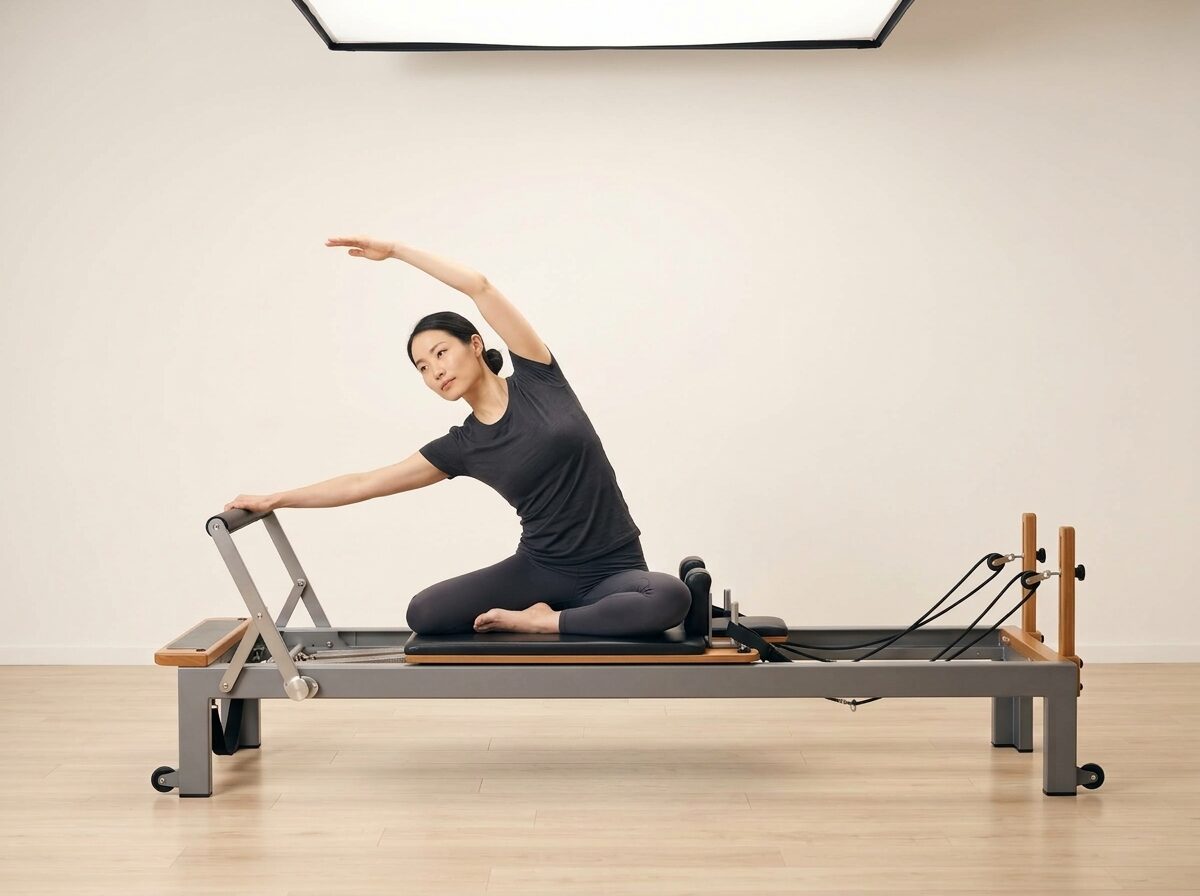
Lateral flexion and thoracic opening exercise performed sitting side-saddle on the carriage.
- Body
- Reformer
- Movement
Teaching Precautions
Common precautions, not exhaustive. Screen every client and refer when in doubt.
- Shoulder Impingement: Limit arm range of motion on side-bend if pain occurs.
Apparatus Setup
Reformer
Target Muscles
Setup Instructions
Sit side-saddle on carriage facing side wall, shin folded against shoulder rests. Hand closest to footbar rests on footbar, opposite arm extended long.
Execution Instructions
- Inhale to reach the top arm long.
- Exhale to side-bend over the footbar, pushing the carriage out, and inhale to lift and counter-stretch away from the footbar.
- Return through centre with control, then repeat to the other side.
Teaching Cues
"Keep both sitbones grounded into carriage mat throughout side-bend."
"Inhale to send breath into lateral ribcage opening."
"Reach the top arm long over the ear before bending — create length in the waist, then side-bend."
Modifications & Progressions
Cross-Legged Sitting (Regression)
Sit cross-legged on carriage if hip tightness prevents side-saddle position.
Deepened Bend (Progression)
Increase the side-bend and the counter-stretch away from the footbar, keeping both sitbones grounded.
Arm Below Shoulder (Injury Modification)
For shoulder impingement, side-bend with the top arm reaching only to shoulder height and the elbow softly bent, stopping before the front of the shoulder pinches.
Similar Exercises
Same category, or body position when the category is unique.